
How to Choose a Renovation Contractor in the GTA (Checklist)

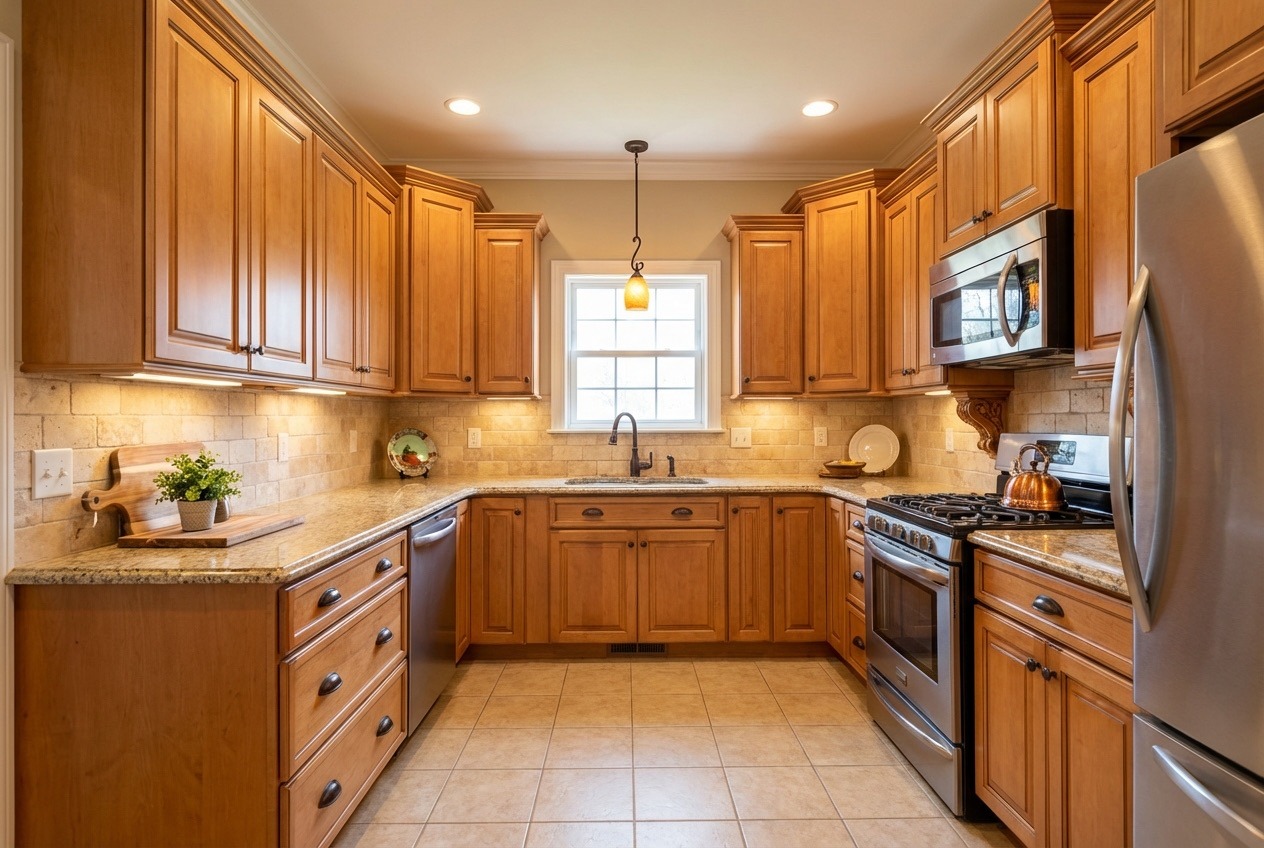
renoethics gallery kitchen traditional wood

How to Choose a Renovation Contractor in the GTA (Checklist)

Short answer: Hire a GTA renovation contractor who has (1) a current WSIB clearance certificate, (2) $2M+ commercial general liability insurance, (3) a fixed-price written quote, (4) recent permitted projects in your specific municipality, (5) a 1-year minimum workmanship warranty, and (6) transparent change-order policies. Skip anyone who offers cash-only pricing, refuses to pull permits, demands 50%+ upfront, or can’t produce insurance certificates on request.

The GTA renovation contractor market is highly fragmented. Thousands of operators range from BCIN-qualified design-build firms to weekend moonlighters with no license and no insurance. The cost of picking wrong is measured in lawsuits, liens on your home, voided insurance, and renovation costs that double mid-project. This checklist covers exactly how to vet a contractor before signing anything.

Step 1: confirm they’re a real, registered business

Start with these quick checks before any conversation gets deeper:

  • Business registration. Ask for their legal business name, not just brand. Search Ontario’s Business Names Registry or the federal corporation registry. Should take 30 seconds to confirm.
  • HST registration. Any contractor with more than $30,000/year in revenue is required to charge and remit HST. If they refuse HST, they’re either very small, cash-basis, or unregistered — all three are risk flags.
  • Physical business address. Not a PO box, not a residential address that can’t be verified, not just a cell phone. Established contractors have an office or shop.
  • Consistent branding and contact info. Website, Google Business Profile, email on a business domain (not @gmail or @hotmail).

Missing any of these isn’t disqualifying on its own, but it narrows who you’re dealing with. Cross-check everything before proceeding.

Step 2: insurance and WSIB (non-negotiable)

Every contractor you hire in Ontario should have both of these. They’re easy to verify in advance.

WSIB clearance certificate

Workplace Safety & Insurance Board (WSIB) covers workers if they’re injured on your property. Without WSIB coverage, you — the homeowner — can be personally liable for an injured worker’s medical costs, lost wages, and long-term disability payments. Tens of thousands to millions of dollars.

Ask the contractor for a current WSIB clearance certificate (a document, not a verbal assurance). Verify it at the WSIB Clearance lookup — free, public, takes 10 seconds.

“We don’t need WSIB because we’re an owner-operator” is a common dodge. It’s sometimes technically true but also means the contractor isn’t covered if they injure themselves on your property. Not your problem legally, but it’s a sign of a smaller, less structured operation.

Commercial general liability insurance

$2M liability coverage is the industry standard for residential renovations in the GTA. Some larger renovations (secondary suites, additions, anything with structural work) should have $5M.

Request a certificate of insurance (COI) naming you as an additional insured for the duration of the project. Legitimate contractors do this routinely — it’s not an imposition.

Verify: insurance company, policy number, expiry date. Call the insurance company if you want to confirm the COI is real. Fake COIs are an occasional scam in Toronto.

Step 3: check recent work (and verify it)

A contractor with 10 years in business should have a portfolio of completed projects. Request 3–5 recent references with similar scope to yours (bathroom, kitchen, basement, addition).

What to ask the references

  1. Was the final cost within 10% of the original fixed quote?
  2. Was the project completed within 2 weeks of the promised end date?
  3. How did the contractor handle unexpected issues (e.g., discovered code violations, material delays)?
  4. Were there any warranty claims? How were they handled?
  5. Would you hire them again? (A surprisingly revealing question — listen for hesitation.)
  6. Did they keep the job site clean at the end of each day?
  7. Did they communicate proactively when issues arose, or did the homeowner have to chase them?

Independent verification

  • Google reviews — look at the full review history, not just the star average. Pattern of 1-star reviews with specific complaints (unfinished work, disappearing contractor) is a hard no.
  • Homestars / HomeAdvisor equivalents — useful but both reviews and negative reviews can be paid or manipulated.
  • Better Business Bureau rating — good as a negative filter (a BBB rating below B is concerning).
  • Social media — Instagram and Facebook posts of recent projects confirm ongoing business activity.
  • Search “[Contractor Name] Ontario lawsuit” — CanLII and Google turn up litigation history.

Step 4: the quote itself is a signal

Request quotes from 3 contractors. Compare not just the price, but what’s in the quote. The format and completeness of a quote reveal more than any marketing material.

Red flags in a quote

  • Single lump sum with no breakdown. “Bathroom renovation: $28,000.” No trade breakdown, no material allowances, no labour vs materials split. You can’t evaluate or negotiate this.
  • Quoted sight-unseen from photos or a phone call. Real quotes require a site visit. Photo-based quotes are guesses that get revised upward once work starts.
  • No inclusions/exclusions list. If it’s not written what’s included, every missing item becomes a change order.
  • Deposit demand over 20%. Standard deposit is 10–15% at signing, another 20–30% at demo completion, milestone payments throughout, 10% holdback until final inspection.
  • Cash-only discount. “We can save you the HST if you pay cash” is tax fraud and also illegal under Ontario’s Construction Act. You also lose all warranty and lien rights.
  • No timeline. A real quote has a start date and an estimated finish date. Vague “we’ll start next month” is unenforceable.
  • Open-ended “as required” items. “Electrical as required, plumbing as required” leaves scope wide open for upcharges.

Green flags in a quote

  • Line-itemed by trade (demo, plumbing, electrical, drywall, tile, finishes)
  • Material allowances specified (tile $X/sq ft, vanity $X–$Y range)
  • Labour separated from materials
  • Inclusions list (what’s in scope)
  • Exclusions list (what’s NOT in scope)
  • Start date + finish date
  • Payment schedule tied to milestones, not calendar dates
  • Change-order policy in writing (how changes are quoted, approved, billed)
  • Warranty terms spelled out
  • Permit handling (who pulls it, who pays)

Step 5: confirm permit competency

Ask specifically: “Have you pulled a permit in my municipality in the last 12 months? Can I see the permit number?”

Permit numbers are public. You can cross-check them at:

Contractors who regularly pull permits know how to produce clean drawings, pass inspections efficiently, and close out permits properly. Contractors who avoid permits usually produce rougher work and leave you holding unpermitted liability.

If a contractor suggests skipping a permit on work that legally requires one, that’s the end of the conversation. See our Toronto permit guide for what requires a permit.

Step 6: understand the warranty

Warranty terms vary wildly in the GTA. Know what you’re getting.

  • Minimum acceptable: 1-year workmanship warranty covering defects in craftsmanship.
  • Better: 2-year workmanship + 5-year water-penetration warranty on bathroom waterproofing.
  • Best: 2-year workmanship + lifetime on certain elements (structural, waterproofing membrane systems) + pass-through manufacturer warranties on fixtures, cabinetry, appliances.

“Lifetime warranty” with no written terms is worthless. Ask for the warranty document before signing.

For additions and new builds: Tarion warranty coverage is mandatory in Ontario for most new-home construction. For secondary suites that qualify as new-construction under Tarion rules, the contractor must be enrolled. Verify at the Tarion vendor registry.

Step 7: the contract

Your signed contract should include:

  1. Parties (legal business name of the contractor, your name)
  2. Property address
  3. Detailed scope of work (typically an appendix, referencing the approved quote)
  4. Price (fixed) + HST separately
  5. Payment schedule tied to completion milestones (not calendar dates)
  6. Start date + estimated finish date
  7. Change order process and pricing methodology
  8. Warranty terms and duration
  9. Insurance requirements (both sides)
  10. Permit responsibility
  11. Dispute resolution clause
  12. Termination clauses (what if either side wants out)
  13. Lien holdback compliance (Ontario’s Construction Act requires 10% holdback on all payments until 60 days after substantial completion)

Never pay full price before final inspection. Never sign an arbitration-only dispute clause that removes your right to small claims court. Never agree to “you pay for materials” arrangements where you buy materials and they bill labour separately — you lose legal protection that way.

Step 8: payment flow — never front-load

Standard payment schedule for a GTA residential renovation:

  • 10–15% at contract signing (to lock in the schedule)
  • 20–25% at demo completion / rough-in start
  • 25% at rough-in inspection pass (or equivalent midpoint milestone)
  • 25% at drywall / major finish start
  • 10% at substantial completion
  • 10% holdback released 60 days after substantial completion (Construction Act requirement)

Any contractor demanding 40%+ upfront is either under-capitalized (uses your money as float) or running a scam. Both are problems. Walk away.

Step 9: communication during the project

Before construction starts, confirm:

  • Single point of contact (project manager) — name, cell, email
  • Weekly update cadence (email, text, phone, or in-person walk-through)
  • Daily on-site lead — who runs the job site day-to-day
  • Work hours (confirm with city bylaws — Toronto: 7am–7pm weekdays, 9am–7pm weekends)
  • Emergency contact for after-hours issues (water leak, door lock failure)
  • Site cleanup expectations (daily broom-clean, end-of-project deep clean)
  • Change-order process (how you’ll review and approve changes in writing)

Red flags that should end the conversation immediately

  • Refuses to provide WSIB clearance or insurance certificates
  • Cash-only pricing or “HST discount for cash”
  • Demands more than 20% deposit upfront
  • No physical business address
  • Won’t provide references
  • Suggests skipping permits that are legally required
  • No written quote — only verbal or handshake
  • Pressure to sign same-day with “special pricing”
  • Brand-new business with no verifiable history
  • Threatens lawsuit or shows aggression when you ask questions
  • Bad online reviews with specific allegations (disappeared with deposit, didn’t complete work, filed false liens)

Green flags that indicate a strong contractor

  • Returns calls/emails within 24 hours
  • Shows up for the quote meeting on time and prepared
  • Asks detailed questions about your lifestyle and priorities (not just specs)
  • Provides references without hesitation, including contact info
  • Can explain permit strategy for your specific project
  • Has a portfolio website with real project photos (not stock images)
  • Provides itemized written quote within 3–5 business days of the site visit
  • Welcomes your request to see insurance and WSIB certificates
  • Has a project manager structure (not just the owner running everything)
  • Carries at least $2M liability insurance
  • Offers a clear change-order policy
  • Willing to put everything in writing, including things they promise verbally

Contractor vetting checklist (printable)

Use this before signing anything:

  • □ Legal business name verified
  • □ HST registered
  • □ Physical office address confirmed
  • □ WSIB clearance certificate — verified online
  • □ $2M+ liability insurance — certificate received
  • □ 3+ recent references provided — all contacted
  • □ Recent permitted project in my municipality — permit number verified
  • □ Google reviews reviewed (minimum 10, pattern assessed)
  • □ BBB rating confirmed
  • □ Fixed-price written quote received
  • □ Quote has line items by trade
  • □ Inclusions/exclusions list documented
  • □ Payment schedule tied to milestones, not calendar
  • □ Deposit <= 20%
  • □ Change-order policy in writing
  • □ Warranty terms in writing (minimum 1-year workmanship)
  • □ Permit responsibility documented (contractor pulls)
  • □ Start date + estimated finish date in contract
  • □ Project manager assigned with direct contact
  • □ Contract signed and copy kept

If all 20 boxes check, you’re likely working with a strong contractor. If 3+ don’t check, slow down and reconsider.

Frequently asked questions

How many quotes should I get for a renovation in the GTA?

Three quotes from qualified contractors is the sweet spot. Two quotes means no comparison. Five+ quotes means more vetting work than most homeowners have time for. The lowest quote is rarely the right choice — it usually reflects missing scope or a contractor under-pricing to win the job.

How much should I pay upfront?

10–15% deposit at signing is standard in Ontario. More than 20% upfront is a yellow flag. More than 35% upfront is a red flag — legitimate contractors carry enough working capital not to need that much of your money before starting work.

What’s the difference between a general contractor and a design-build firm?

A general contractor coordinates construction based on drawings provided to them (usually by a designer or architect you hired separately). A design-build firm handles design AND construction under one contract. Design-build is faster and avoids “not my problem” finger-pointing between designer and builder. General contractors give you more design flexibility but require you to manage more of the process.

What if my contractor abandons the job partway through?

You have several remedies: (1) file a small claims court action if the amount is under $35,000, (2) file a Construction Act claim for materials/labour delivered, (3) hire a new contractor and sue the original for the cost difference. Prevent this by paying on milestones (not ahead), holding the final 10% as a holdback, and documenting all agreements in writing.

Should I always pick the contractor with the best reviews?

No — reviews are one data point. A contractor with 30 five-star reviews and one specific well-documented complaint may be more trustworthy than one with 200 reviews gamed through incentives. Read the actual review text, not just the star average. Look for specificity and mention of actual trade work (waterproofing, load-bearing work, inspections), not just “great communication”.

Is it cheaper to hire my own sub-trades separately?

On paper, sometimes yes — you skip the general contractor’s margin. In practice, no, because coordinating sub-trades requires experience most homeowners don’t have. Scheduling conflicts, inspection failures, and “not my job” gaps between trades typically cost more than a general contractor’s margin. Hire a GC unless you’re in the trade yourself.

Plan your next renovation with RenoEthics

We’ve built medical, commercial, and residential renovations across Richmond Hill, Vaughan, Markham, Aurora, Newmarket, and North York for over a decade. Fixed-price quotes, current WSIB clearance, $2M liability coverage, 1-year workmanship warranty on every project. We handle permits start to finish.

Book a free consultation or call 647-725-9754. Response within 24 hours.

Related Posts