
May 18, 2023

Ontario healthcare renovations are full of costly pitfalls—unlicensed contractors, missed permits, wrong materials. Learn the 5 mistakes clinic owners make and how to avoid...
If you're a healthcare professional planning to renovate your medical office in Ontario, understanding accurate cost expectations is crucial for successful project planning. Whether you're updating a family practice in Richmond Hill, expanding a walk-in clinic in Toronto, or building out a new specialty practice in the GTA, renovation costs can vary dramatically based on dozens of factors.
This comprehensive 2026 pricing guide breaks down exactly what you can expect to pay for medical office renovations across Ontario, with current market data, detailed cost breakdowns by space type, hidden expenses to watch for, and proven strategies to maximize your renovation investment.
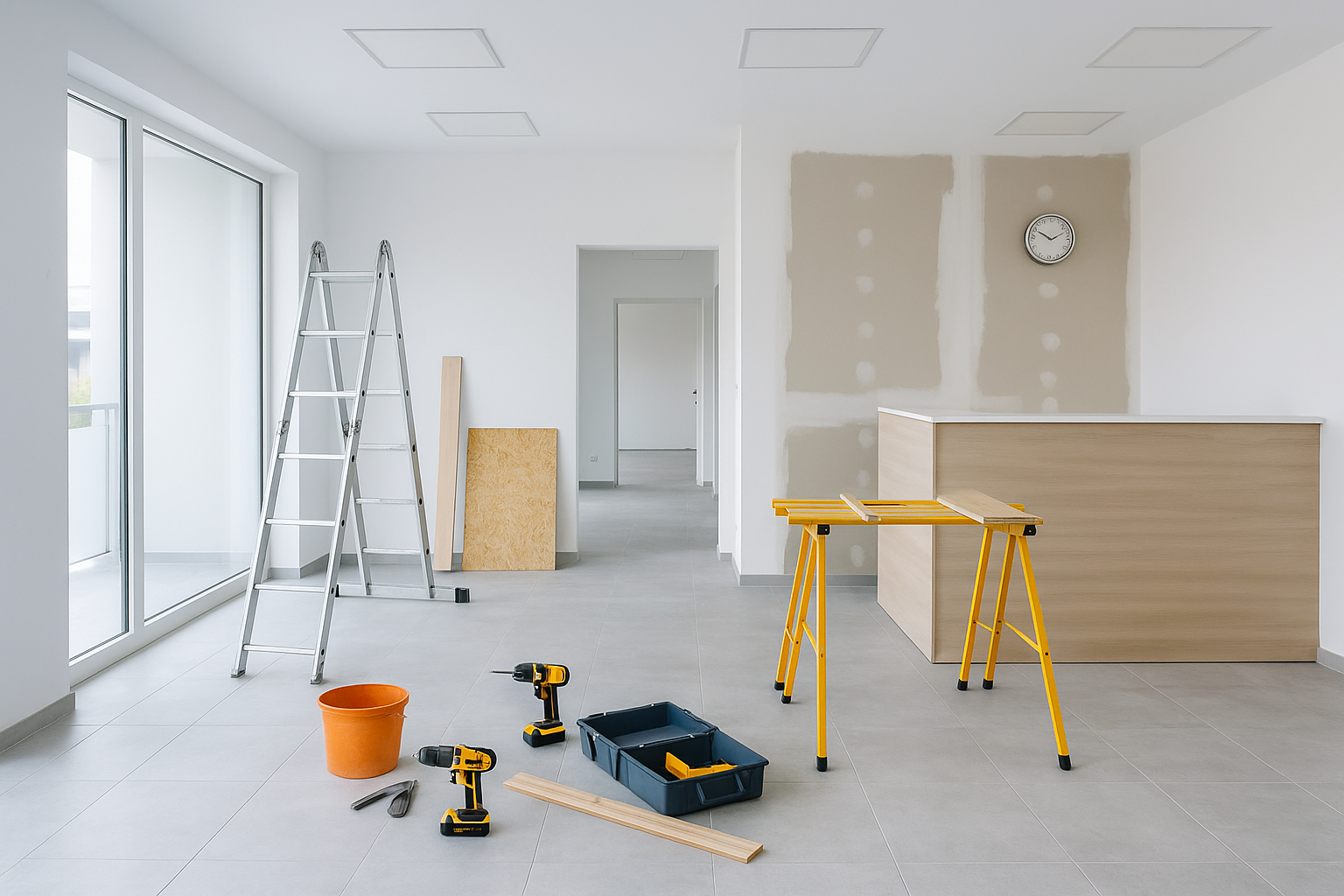
Based on current 2026 market data from contractors across Ontario, medical office renovation costs typically range from $150 to $300 per square foot for complete build-outs. This represents a moderate increase from 2023-2024 pricing due to inflation, updated healthcare compliance requirements, and increased material costs.
Ontario's updated CSA Z8000 healthcare facility standards (effective 2025) have introduced more stringent requirements for infection control, ventilation, and accessibility. These changes can add 10-20% to renovation costs compared to pre-2025 projects. Always budget for compliance upgrades when planning medical space renovations.
The difference between a $150/sq ft and $300/sq ft project typically comes down to:
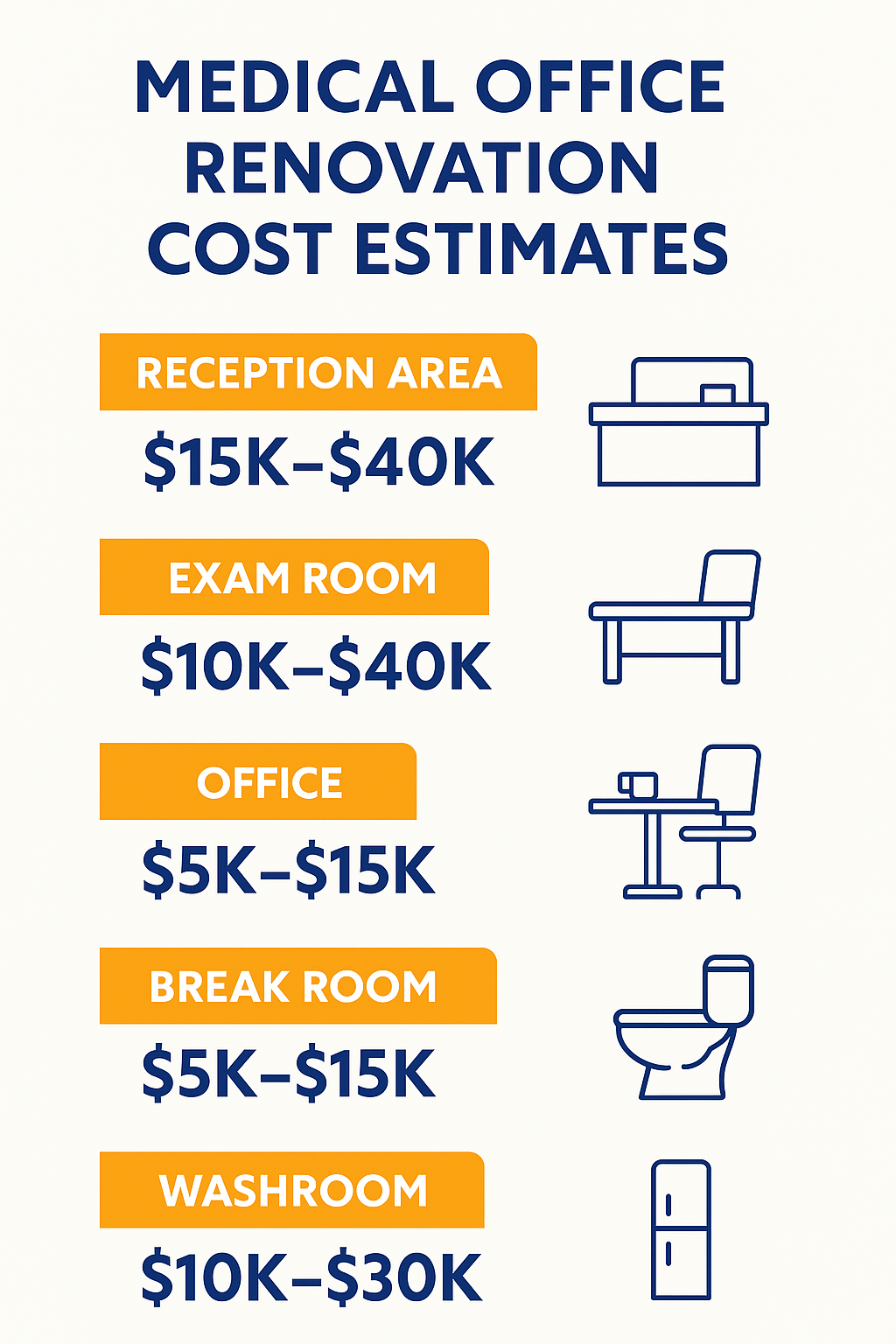
Understanding costs by specific room type helps you budget accurately and identify where to allocate resources. Here's what Ontario medical practices are actually paying in 2026:
| Space Type | Cost Range (Per Sq Ft) | Key Cost Drivers |
|---|---|---|
| Reception & Waiting Area | $120 – $200 | Custom millwork, flooring, lighting fixtures, check-in technology |
| Standard Examination Rooms | $140 – $250 | Medical cabinetry, sinks, diagnostic equipment interfaces, soundproofing |
| Procedure Rooms | $200 – $350 | Specialized plumbing, medical gas lines, enhanced lighting, infection control surfaces |
| AODA-Compliant Washrooms | $180 – $300 | Accessibility fixtures, grab bars, wider doors, specialized plumbing, tile work |
| Staff Rooms & Admin Offices | $100 – $160 | Standard finishes, less clinical requirements, basic electrical/HVAC |
| Diagnostic Imaging Rooms | $250 – $400 | Lead shielding, heavy-duty electrical, reinforced floors, specialized HVAC |
| Soundproof Audiology Booths | $300 – $450 | Acoustic materials, double-wall construction, specialized doors, vibration isolation |
| Pharmacy Dispensaries | $180 – $280 | Security systems, specialized cabinetry, climate control, secure storage |
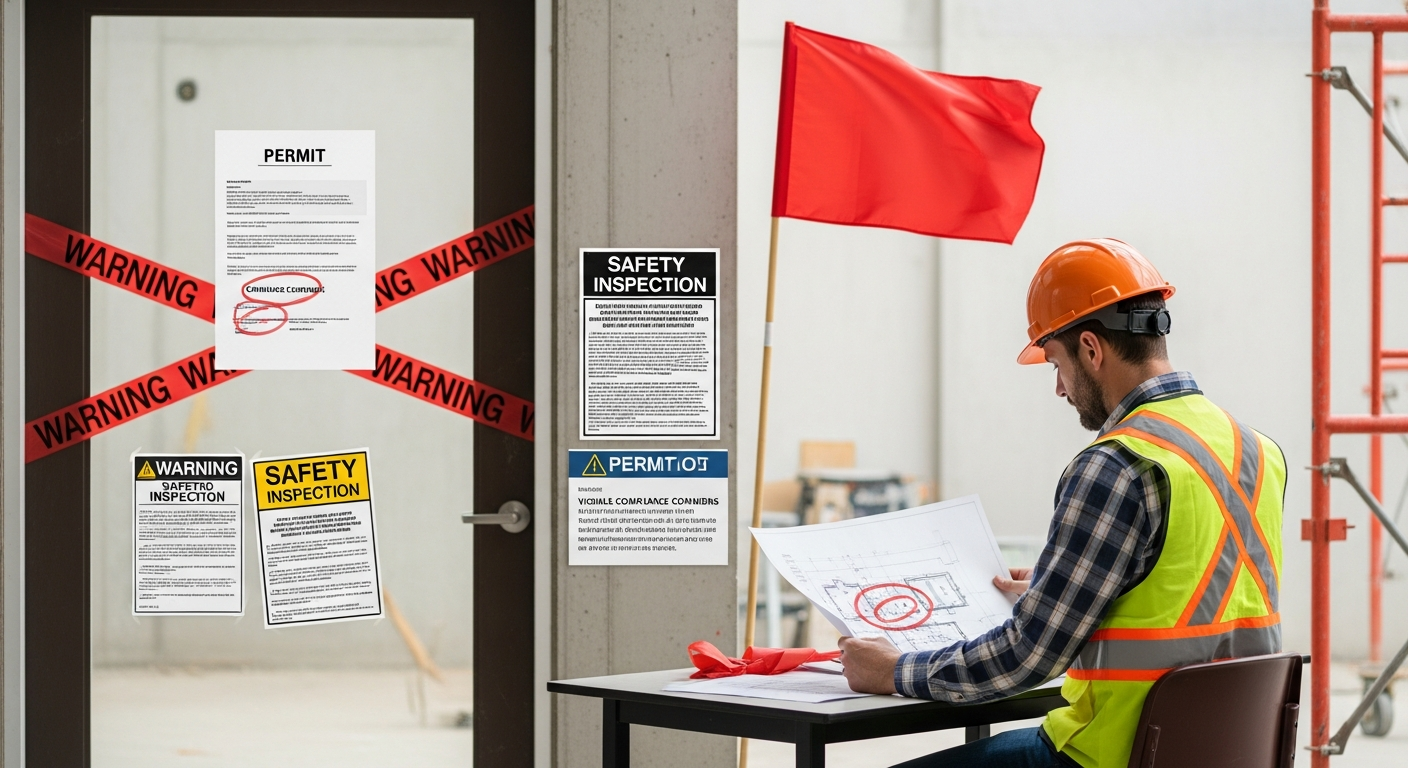
Ontario medical facilities must comply with multiple regulatory frameworks including the Ontario Building Code, CSA Z8000 healthcare facility standards, AODA accessibility requirements, and municipal health regulations. Compliance work often represents 20-30% of total project costs and includes:
The current state of your space dramatically impacts renovation costs. Converting a former medical office can cost 30-50% less than converting retail or general office space because:
When searching for medical office space, prioritize locations with previous healthcare use. The infrastructure savings often justify slightly higher lease rates. A former dental office, veterinary clinic, or medical practice can save you $40,000-$80,000 on a 2,000 sq ft build-out.
Different medical specialties have vastly different infrastructure needs. A general practitioner office requires basic plumbing and standard electrical, while specialty practices demand:
Where you're building in Ontario significantly impacts costs:
Professional services and permits typically represent 18-25% of your total budget:
Modern medical practices require sophisticated technology infrastructure:
Budget $15,000-$40,000 for comprehensive technology integration in a typical 2,000-3,000 sq ft clinic.
Material selection dramatically impacts both upfront costs and long-term value:
Location significantly impacts medical office renovation costs in Ontario. Here's how different markets compare in 2026:
Richmond Hill, Vaughan, Markham, Mississauga, Brampton represent Ontario's largest medical construction market with:
Downtown medical renovations face unique challenges:
Smaller Ontario cities offer cost advantages:
Costs vary dramatically based on proximity to major centers:
Successful practice owners know where to invest and where to save. Here are proven strategies to maximize your renovation budget:
Custom millwork looks impressive but costs 40-60% more than quality pre-manufactured medical cabinetry systems. Modern pre-fab medical casework from manufacturers like Clinton Industries or Midmark delivers healthcare-grade durability at a fraction of custom costs.
Potential savings: $15,000-$30,000 on a typical 6-room clinic
Instead of closing completely, renovate in phases:
Strategic material selection delivers professional results at lower costs:
Negotiating strong lease terms can dramatically reduce out-of-pocket costs:
Example: A 3,000 sq ft space with a $40/sq ft TI allowance provides $120,000 toward renovation costs.
If expanding multiple locations, bundle projects to negotiate better contractor rates:
Contractor pricing fluctuates with market demand:
Understanding real project costs helps you benchmark your own renovation. Here are actual examples from Ontario medical renovations completed in 2025-2026:
Scope: Cosmetic upgrade of existing 1,200 sq ft family practice
Total Cost: $72,000 ($60/sq ft)
Timeline: 3 weeks with phased approach
Scope: Complete build-out of former retail space into 2,500 sq ft walk-in clinic
Total Cost: $487,000 ($195/sq ft)
Timeline: 14 weeks from permit to occupancy
Scope: Expansion and renovation of 3,200 sq ft dental practice
Total Cost: $896,000 ($280/sq ft)
Timeline: 18 weeks
Scope: Audiology and hearing clinic with specialized acoustic requirements, 1,800 sq ft
Total Cost: $468,000 ($260/sq ft)
Timeline: 12 weeks
Understanding realistic timelines helps you plan your practice opening and manage patient expectations. Here's what to expect:
Working with a healthcare-specialized contractor like RenoEthics can reduce timelines by 20-30% compared to general contractors. We understand medical practice workflows, maintain relationships with healthcare-specific suppliers, and know exactly what municipal inspectors look for in medical facilities—eliminating costly delays and revisions.
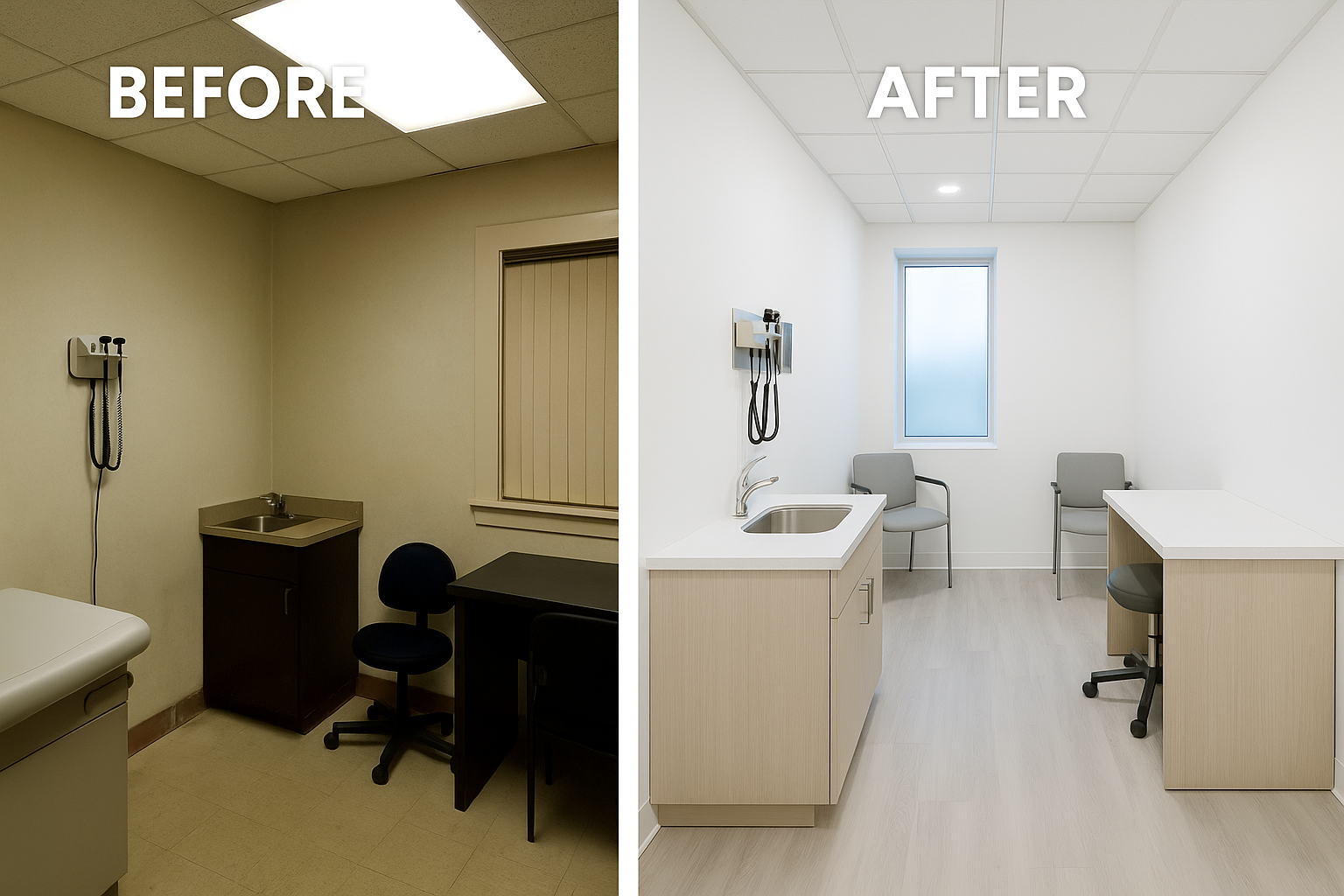
Example of a completed medical examination room renovation meeting all Ontario healthcare standards
A small medical office renovation (800-1,200 sq ft) typically costs between $80,000-$240,000 depending on scope. A cosmetic refresh with new flooring, paint, and updated fixtures runs $80,000-$120,000, while a complete build-out with new exam rooms, plumbing, and HVAC upgrades can reach $180,000-$240,000. The average cost per square foot ranges from $100-200 for small spaces.
Typical medical office renovation costs include: demolition and disposal, framing and drywall, electrical and lighting, plumbing for exam room sinks, HVAC installation or upgrades, medical-grade flooring, wall finishes, cabinetry and millwork, doors and hardware, and basic contractor fees. Additional costs include architectural design ($8,000-25,000), permits ($2,000-8,000), and FF&E (furniture, fixtures, equipment) which can add $40,000-100,000+.
Complete medical office renovations in Ontario typically take 3-6 months from start to finish. This includes 6-12 weeks for design and permits, 8-20 weeks for construction (depending on size and complexity), and 2-4 weeks for final inspections and setup. Small cosmetic refreshes can be completed in 3-6 weeks, while large specialty clinics may require 6-8 months total timeline.
Yes, medical office renovations in Ontario require building permits and must comply with the Ontario Building Code, CSA Z8000 healthcare facility standards, AODA accessibility requirements, and local municipal health regulations. Permit costs range from $2,000-$8,000 depending on project scope and municipality. Approval timelines are typically 4-8 weeks. Healthcare-specialized contractors can streamline this process and ensure compliance.
Yes, phased renovations allow you to maintain operations during construction. The most common approach is renovating half your clinic while operating in the other half, then switching. This adds 2-4 weeks to the timeline but prevents complete revenue loss. For busy practices generating $50,000+/month, phased renovations can save $100,000-200,000 in lost revenue compared to full closure. Proper dust barriers, noise management, and IPAC protocols are essential.
Downtown Toronto medical renovations cost 20-30% more than GTA suburbs due to higher labor rates ($85-120/hour vs $65-95/hour), parking challenges, restricted work hours, and premium material pricing. Toronto downtown averages $180-350/sq ft compared to $150-300/sq ft in the GTA. Secondary markets like Barrie or Kingston cost 10-15% less than the GTA ($130-260/sq ft), though specialized contractor availability may be limited.
Always include a 15-25% contingency fund for unexpected conditions. Older buildings commonly reveal issues during demolition including asbestos ($15,000-40,000 for abatement), outdated electrical panels requiring upgrades ($8,000-20,000), plumbing issues, or structural concerns. Even newer spaces can have surprises. A $200,000 renovation should have a $30,000-50,000 contingency reserve. This protects your timeline and prevents mid-project financing scrambles.
Medical-grade luxury vinyl plank (LVP) offers the best value for most clinical applications at $6-9/sq ft installed. It provides excellent durability, is easy to clean, meets infection control requirements, and looks professional. Premium options include porcelain tile ($12-18/sq ft) for high-traffic areas and medical-grade sheet vinyl ($8-12/sq ft) for procedure rooms. Avoid carpet in clinical areas due to infection control concerns. Waiting rooms can use commercial-grade carpet tile ($4-8/sq ft) if properly specified.
Healthcare-specialized contractors typically deliver better outcomes for medical offices because they understand CSA Z8000 requirements, IPAC standards, medical workflow optimization, and healthcare-specific permit processes. While they may charge 5-10% more upfront, they typically complete projects 20-30% faster, avoid costly compliance mistakes, and deliver spaces that function better for clinical operations. General contractors often face learning curves with healthcare requirements, leading to delays and change orders.
The top mistakes include: (1) Underestimating total costs by 30-40% due to missing FF&E, technology, and contingency budgets, (2) Not planning for lost revenue during construction, (3) Choosing contractors based solely on lowest price rather than healthcare experience, (4) Failing to involve staff in workflow planning, (5) Skimping on soundproofing between exam rooms, (6) Inadequate storage planning, and (7) Not budgeting for future expansion. Working with experienced healthcare contractors prevents these costly errors.
Get expert guidance and accurate cost estimates for your Ontario medical practice renovation. RenoEthics specializes in healthcare facility construction across the GTA, delivering compliant, efficient, and patient-focused medical spaces.
Get Your Free ConsultationUnderstanding medical office renovation costs in Ontario is essential for successful project planning, but remember that your renovation is an investment in your practice's long-term success. A well-designed, properly executed medical office renovation delivers benefits far beyond aesthetics:
While costs are important, focusing solely on the cheapest option often leads to poor outcomes. Instead, prioritize value: work with experienced healthcare contractors, invest in quality materials where it matters, and design spaces that will serve your practice well for 10-15+ years.
At RenoEthics, we've helped dozens of medical practices across the Greater Toronto Area navigate the renovation process with confidence. Our healthcare-specialized team understands Ontario's regulatory requirements, medical workflow optimization, and how to deliver projects on-time and on-budget.
Whether you're planning a small refresh or a complete build-out, we're here to help you make informed decisions and create a medical space that supports your practice's growth and success.
Ontario healthcare renovations are full of costly pitfalls—unlicensed contractors, missed permits, wrong materials. Learn the 5 mistakes clinic owners make and how to avoid...
What return do Ontario clinics actually see from renovation? Real data on patient volume growth, billing increases, and property value changes after medical office...

Choosing a medical office renovation contractor is one of the most consequential decisions you will make for your practice. The wrong contractor means failed...