

March 13, 2026

The Mississauga walk-in clinic opened 40 minutes late on its first Monday morning. Twenty-three patients were waiting outside when the staff arrived — a...
Renovating a pharmacy in 2026 goes far beyond fresh paint and updated shelving—it's a strategic investment that transforms how you deliver patient care, optimize staff workflow, and position your business for the evolving healthcare landscape. With Ontario pharmacies now offering expanded clinical services including minor ailment prescribing, vaccinations, and health screenings, your physical space must support these enhanced care models while maintaining OCP compliance and operational efficiency.
This comprehensive guide explores the essential elements of successful pharmacy renovations in Ontario, from OCP-mandated consultation rooms and dispensary requirements to cutting-edge workflow optimization, modern lighting strategies, and technology integration that supports the service-led pharmacy model dominating 2026.
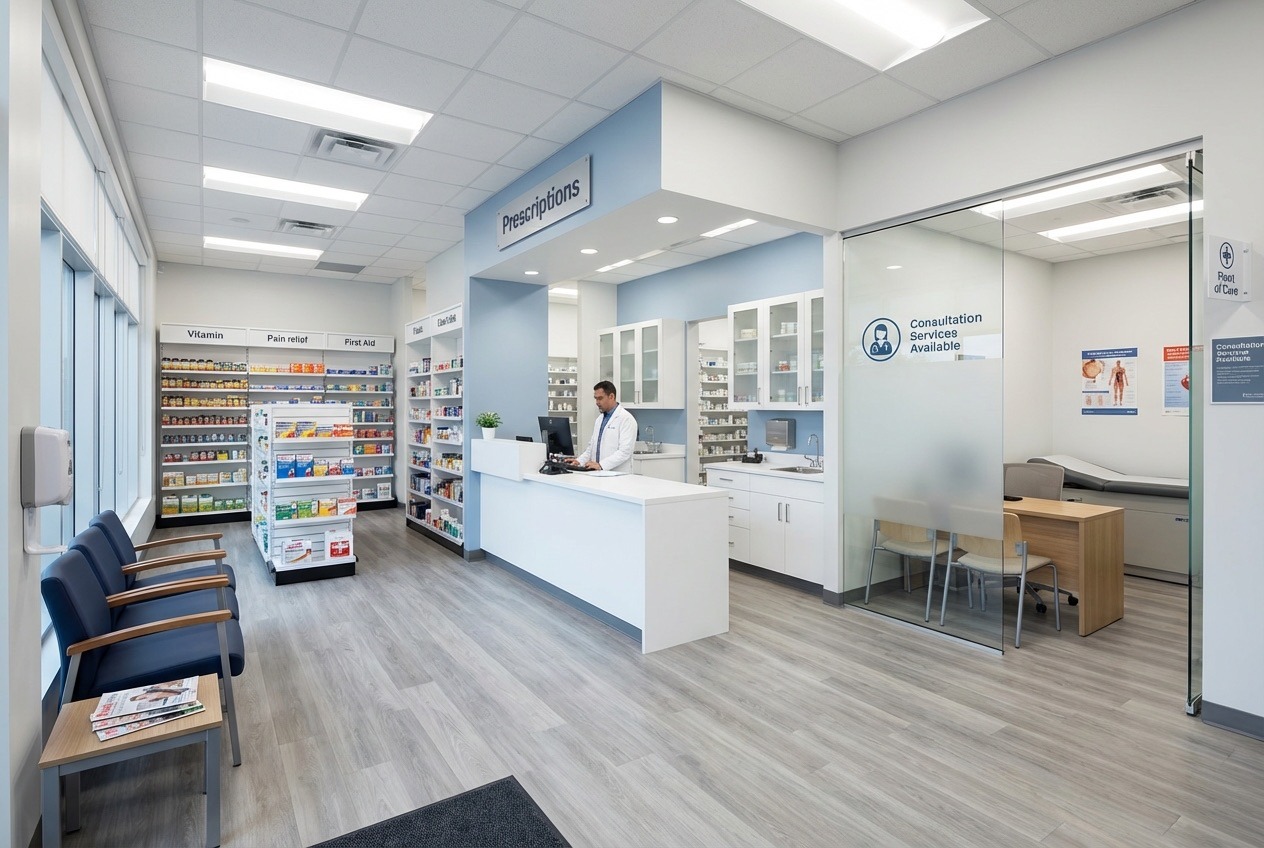
The pharmacy industry is undergoing its most significant transformation in decades. Ontario pharmacies in 2026 are evolving from product-focused dispensaries to comprehensive healthcare hubs, and your physical space must reflect this fundamental shift.
With Ontario pharmacists now authorized to prescribe for minor ailments, administer expanded vaccination programs, and conduct health screenings, the traditional pharmacy layout—centered entirely around dispensing—no longer supports modern practice. Successful 2026 pharmacy renovations prioritize:
Pharmacies renovating with traditional retail-first layouts are already finding themselves at a competitive disadvantage. The most profitable Ontario pharmacies in 2026 derive 40-60% of revenue from clinical services rather than product sales. Your renovation must support this revenue shift or risk obsolescence within 3-5 years.
Pharmacies now function as community health centers. Design emphasizes professional clinical spaces, private consultation areas, and visible service delivery over traditional retail merchandising.
Moving away from sterile, institutional aesthetics. Modern pharmacies use warm lighting, natural materials, comfortable seating, and inviting color palettes to reduce patient anxiety.
Acoustically private consultation rooms, discreet counseling areas, and secure prescription pickup zones that protect patient confidentiality without sacrificing accessibility.
Dispensaries designed to accommodate automated filling systems, digital inventory management, and technology that reduces repetitive tasks while improving accuracy.
AODA-compliant design as standard, not afterthought. Wide aisles, lowered consultation desks, accessible consultation rooms, and mobility aid-friendly layouts throughout.
Self-service kiosks, digital wayfinding, online appointment booking integration, and prescription pickup lockers that support modern patient expectations.
Before exploring design aesthetics and workflow optimization, every Ontario pharmacy renovation must meet specific OCP regulatory requirements. Non-compliance can delay your opening, result in failed inspections, and jeopardize your Certificate of Accreditation.
All pharmacy renovations in Ontario must submit floor plans to OCP at least 45 days before construction begins. Plans must clearly show total square footage, dispensary boundaries, sink locations, consultation areas, and compounding facilities (if applicable).
| Requirement | OCP Standard | Design Implications |
|---|---|---|
| Dispensary Sinks | Minimum TWO sinks (or one double sink) within dispensary area | Plan plumbing infrastructure early; additional sink required for Level B/C compounding |
| Consultation Area | Acoustically private consultation room or designated area | Minimum 80-100 sq ft; must ensure patient conversations cannot be overheard |
| Secure Boundaries | Clearly delineated and physically separate accredited pharmacy area | If pharmacy shares space with retail, must have distinct secure perimeter |
| Narcotic Storage | Secure storage meeting federal controlled substance requirements | Metal safe inside lockable cupboard; plan for adequate space and accessibility |
| Temperature Control | Climate-controlled storage with temperature monitoring | Refrigeration equipment with twice-daily min/max temperature recording |
| Accessibility (AODA) | Barrier-free access to all patient-facing areas | 36" minimum doorways, 5-foot wheelchair turning radius in consultation rooms |
| Required Signage | OCP accreditation number, Designated Manager name, "Point of Care" symbol | Plan prominent, easily visible signage locations |
If your pharmacy provides Level B (hazardous/non-sterile) or Level C (sterile/non-sterile) compounding, additional NAPRA standards apply:
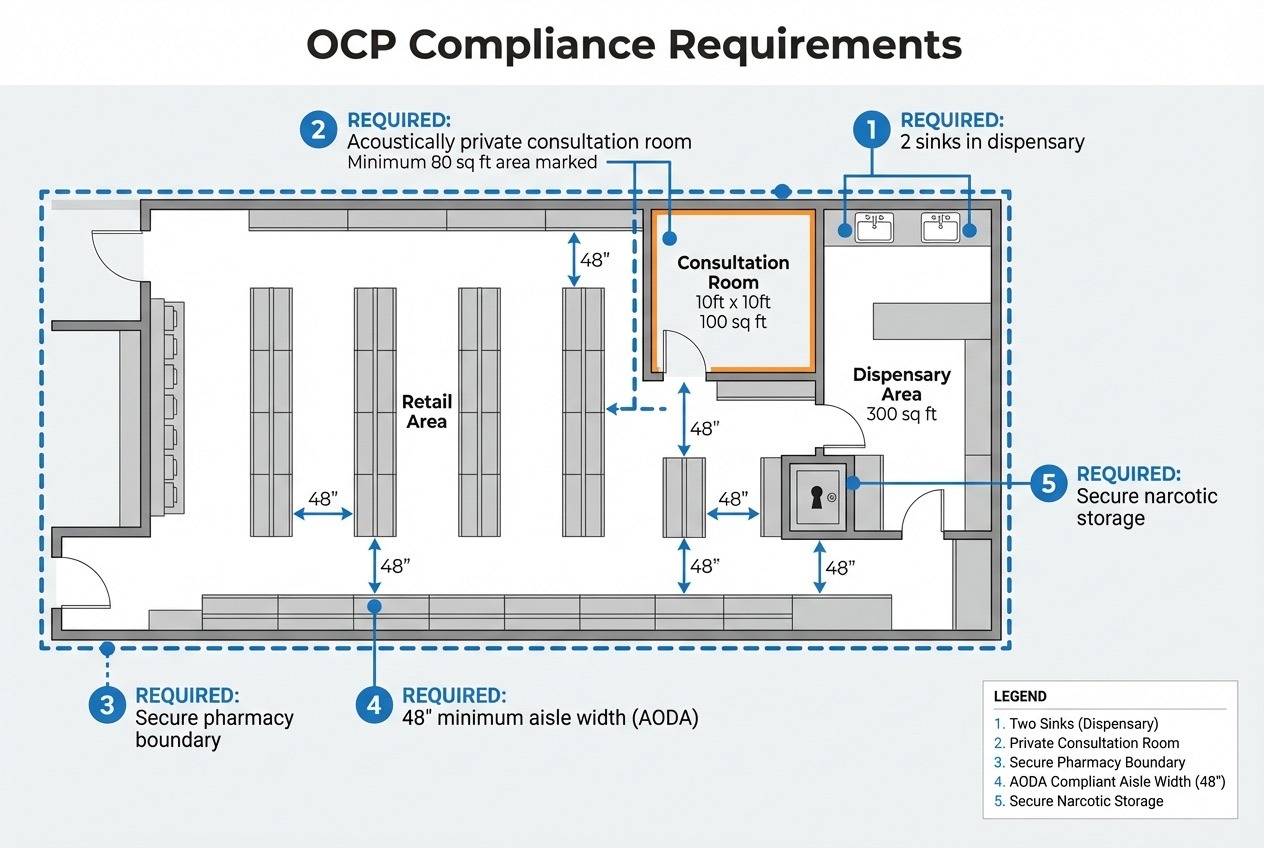
OCP mandatory compliance requirements for Ontario pharmacy renovations
A well-designed pharmacy layout serves three critical functions: supports efficient pharmacist workflow, creates intuitive patient navigation, and maximizes revenue per square foot. Achieving all three requires strategic space planning.
The heart of pharmacy operations should be centrally located with clear separation between intake, filling, verification, and packaging stations. Modern dispensary design principles include:
The 2026 pharmacy prioritizes clinical service delivery. Strategic placement includes:
While clinical services drive profitability, strategic retail placement remains important:
Modern inventory systems reduce storage needs, but adequate space remains essential:
The best pharmacy layouts minimize "steps per prescription." Track your current pharmacist movement patterns—if your team walks more than 15-20 steps from dispensary to consultation room to pickup counter, workflow inefficiency is costing you time and money. Aim for compact, logical flow where key zones connect efficiently.
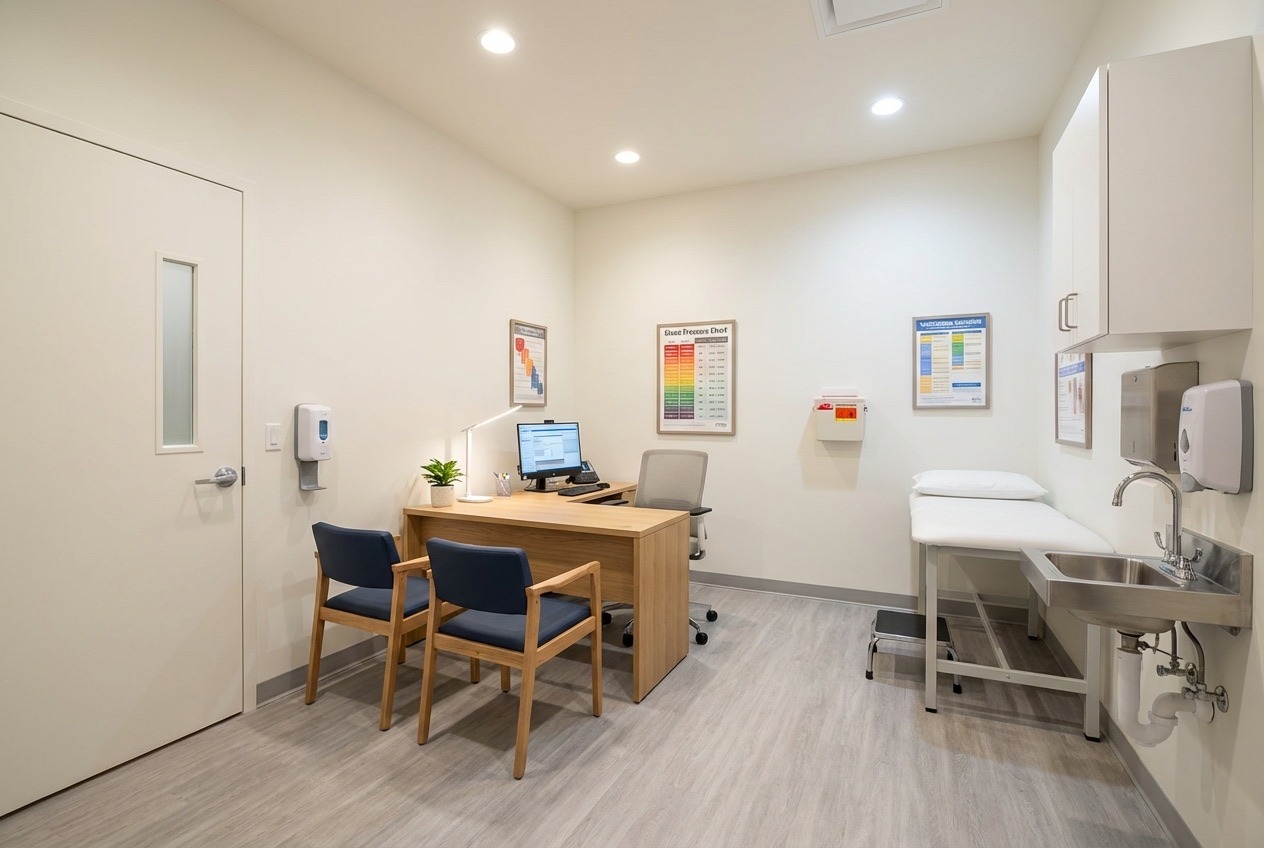
Efficient dispensary workflow design with proper task lighting and OCP-compliant dual sinks
Private consultation rooms have evolved from regulatory checkbox to revenue-generating clinical assets. With Ontario pharmacies providing expanded services, consultation room design directly impacts service delivery quality and patient satisfaction.
The Ontario College of Pharmacists requires a "separate and distinct patient consultation area offering acoustical privacy." This means:
While OCP doesn't mandate a fully enclosed room, best practice in 2026 strongly favors enclosed consultation rooms for several reasons:
| Element | Minimum Acceptable | Best Practice |
|---|---|---|
| Size | 80 sq ft | 100-120 sq ft for comfort and wheelchair accessibility |
| Door Width | 32 inches | 36 inches (AODA standard for full accessibility) |
| Turning Radius | N/A (if not wheelchair accessible) | 5-foot diameter clear space for wheelchair maneuverability |
| Acoustics | Standard drywall construction | Sound-rated walls (STC 50+) or acoustic insulation for true privacy |
| Sink | Not required by OCP | Strongly recommended for COVID testing, vaccinations, hand hygiene |
| Furniture | 2 chairs, small table | Adjustable exam table, 2-3 chairs, desk, storage cabinet, sharps container |
| Technology | None | Computer/tablet for EHR access, blood pressure monitor, thermometer |
Where you place consultation rooms significantly impacts workflow efficiency:
Lighting might seem like a minor detail, but it profoundly impacts prescription accuracy, employee performance, customer perception, and overall safety. Poor pharmacy lighting contributes to dispensing errors, staff fatigue, and an unwelcoming atmosphere.
Provides overall illumination throughout the pharmacy. Best practices for 2026:
Focused illumination for critical work areas where prescription errors could occur:
Strategic highlighting of retail products and creating visual interest:
If your pharmacy has windows or skylights, maximize the benefits while managing challenges:
Switching from fluorescent to LED lighting typically costs $3,000-$8,000 for a standard 1,500 sq ft pharmacy but pays for itself within 2-3 years through energy savings alone. Add improved staff performance, reduced error risk, and better customer experience—the ROI is compelling. LED retrofits qualify for many utility company rebate programs, reducing upfront costs by 20-40%.
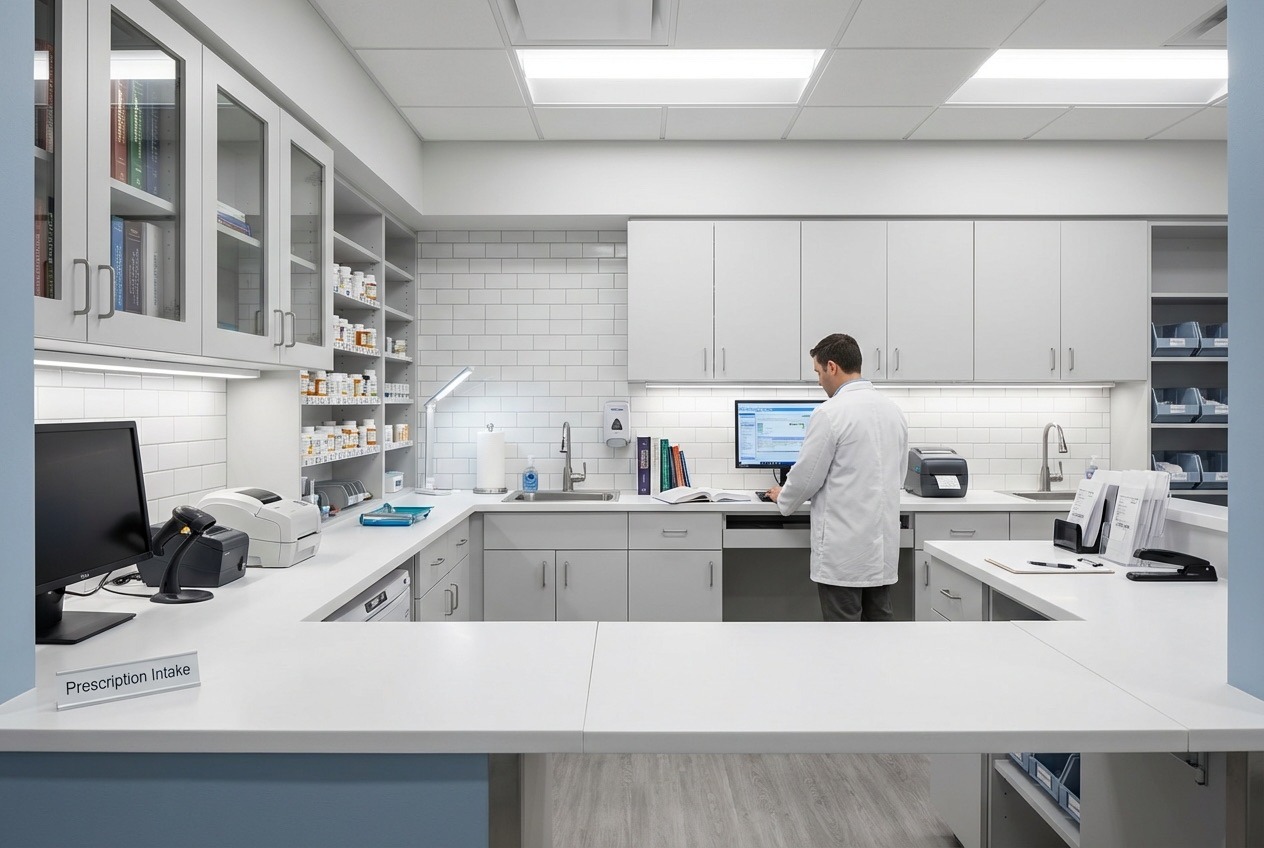
Professional pharmacy lighting design: Layered approach with ambient, task, and accent lighting
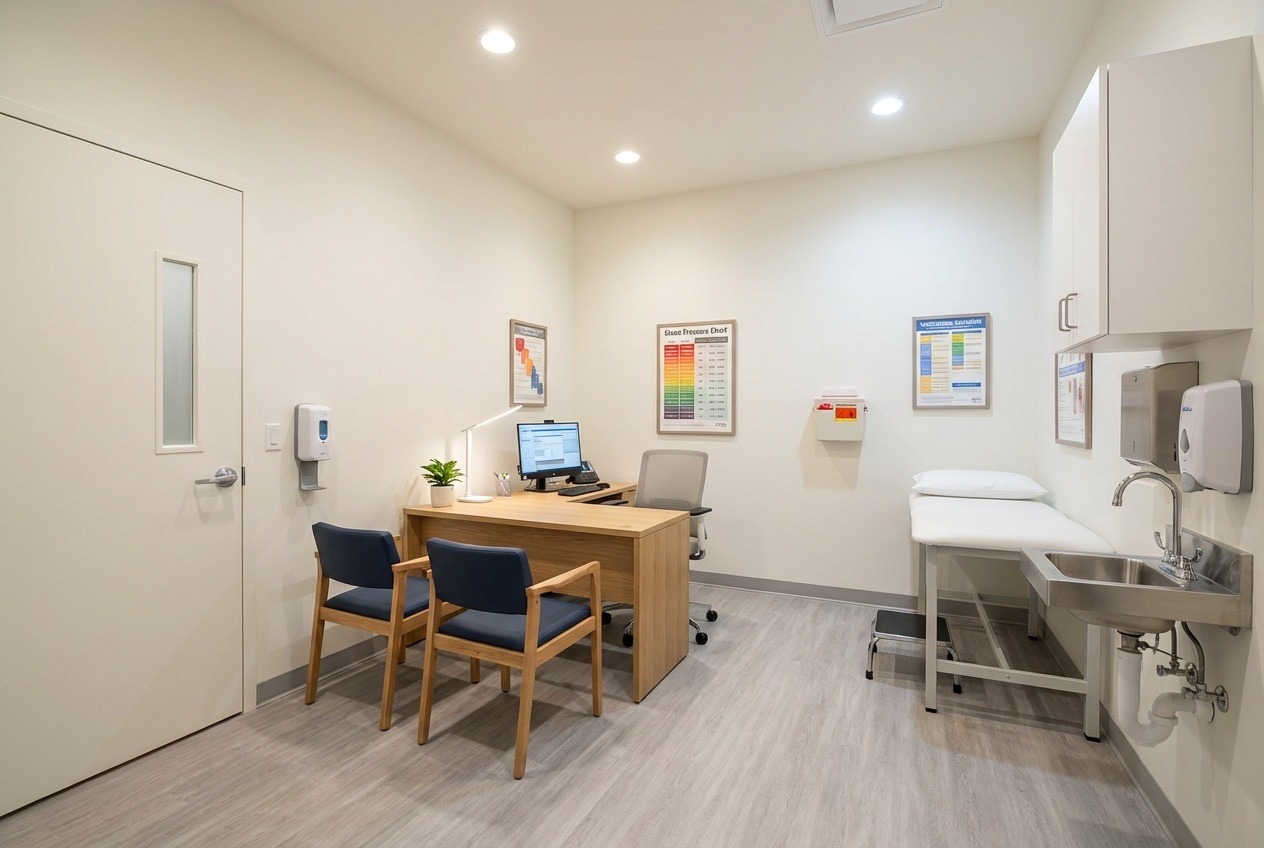
Ideal consultation room setup meeting OCP standards and AODA accessibility requirements
All Ontario pharmacies must have: (1) minimum two sinks within the dispensary (or one double sink), (2) acoustically private consultation room or area, (3) clearly delineated and secure pharmacy boundaries, (4) secure narcotic storage, (5) climate-controlled medication storage with temperature monitoring, and (6) AODA-compliant accessibility. Floor plans must be submitted to OCP at least 45 days before construction begins.
Minimum 80 square feet is acceptable, but best practice is 100-120 sq ft for comfort and wheelchair accessibility. The room must have a 5-foot diameter turning radius for wheelchairs (if designed for full accessibility) and a minimum 36-inch doorway. Include space for an exam table, 2-3 chairs, desk, and storage cabinet. Adding a sink increases functionality for vaccinations and COVID testing.
LED lighting with 90+ CRI (color rendering index) at 750-1000 lux brightness and 3000-4000K color temperature provides optimal visibility for prescription filling while reducing eye strain. Task lighting (1000+ lux) should supplement workstations where pharmacists verify medications and read labels. Avoid harsh fluorescent lighting above 5000K—it creates institutional feel and contributes to staff fatigue.
Typical timelines: Design and OCP floor plan approval (6-8 weeks), construction for minor updates (3-6 weeks), full pharmacy build-out (10-16 weeks), and compounding pharmacy construction (12-20 weeks). Submit floor plans to OCP 45 days before construction. Factor additional time for permit approvals and final OCP inspection before Certificate of Accreditation is issued.
Yes, phased renovations allow continued operations. Common approach: renovate non-public areas (storage, staff room) first, then retail sections, and finally dispensary during slower periods or with temporary dispensary setup. Work with contractors experienced in operational pharmacies who can install dust barriers, work after-hours, and maintain IPAC standards. This adds 2-4 weeks to timeline but prevents complete revenue loss.
Standard pharmacies need one acoustically private consultation area (can be semi-private). Compounding pharmacies face stricter requirements: dedicated compounding area separate from dispensary, additional sink(s) beyond the two dispensary sinks, proper ventilation, and specialized equipment. Level C (sterile) compounding requires ISO Class 7/8 cleanrooms, C-PEC hoods, anteroom/buffer room design, and HEPA filtration—significantly increasing construction complexity and cost.
Absolutely prioritize clinical service areas. The 2026 pharmacy revenue model is shifting from product sales to clinical services (minor ailment prescribing, vaccinations, medication reviews). Leading Ontario pharmacies are reducing retail SKUs by 30-40% to create consultation rooms, health service desks, and clinical assessment areas. Pharmacies renovating with traditional retail-first layouts risk competitive disadvantage within 3-5 years as the service-led model dominates.
Top mistakes: (1) Consultation rooms too small or poorly located far from dispensary, (2) Inadequate dispensary workspace for growing prescription volume, (3) Poor workflow causing excessive pharmacist movement, (4) Insufficient electrical capacity for future technology/automation, (5) Forgetting staff break room and storage needs, (6) Not planning for automation equipment space, (7) Retail-first layout in clinical service era, and (8) Weak acoustical privacy in consultation areas.
Get expert guidance on OCP-compliant pharmacy renovations from RenoEthics' specialized healthcare construction team. We deliver efficient, compliant, and patient-focused pharmacy spaces across the Greater Toronto Area.
Schedule Your Free ConsultationPharmacy renovation in 2026 is about far more than updated aesthetics—it's about strategically positioning your business for the evolving healthcare landscape. As Ontario pharmacies transition from dispensing-focused operations to comprehensive clinical service providers, your physical space must support this transformation.
The best pharmacy renovations balance regulatory compliance, operational efficiency, patient experience, and future flexibility. They create spaces where pharmacists can deliver expanded clinical services efficiently, where patients feel comfortable discussing sensitive health matters privately, and where your team can work without workflow frustrations.
Whether you're building a new pharmacy from the ground up, modernizing an existing space, or adding consultation rooms to support clinical services, partnering with healthcare-specialized contractors ensures your renovation meets OCP standards, optimizes workflow, and positions your pharmacy for long-term success.
At RenoEthics, we've helped numerous Ontario pharmacies navigate successful renovations—from independent community pharmacies to specialty compounding facilities. Our team understands OCP requirements, modern pharmacy workflows, and how to create spaces that serve both your business objectives and your patients' healthcare needs.
The pharmacy industry is evolving rapidly. Make sure your physical space evolves with it.
The Mississauga walk-in clinic opened 40 minutes late on its first Monday morning. Twenty-three patients were waiting outside when the staff arrived — a...
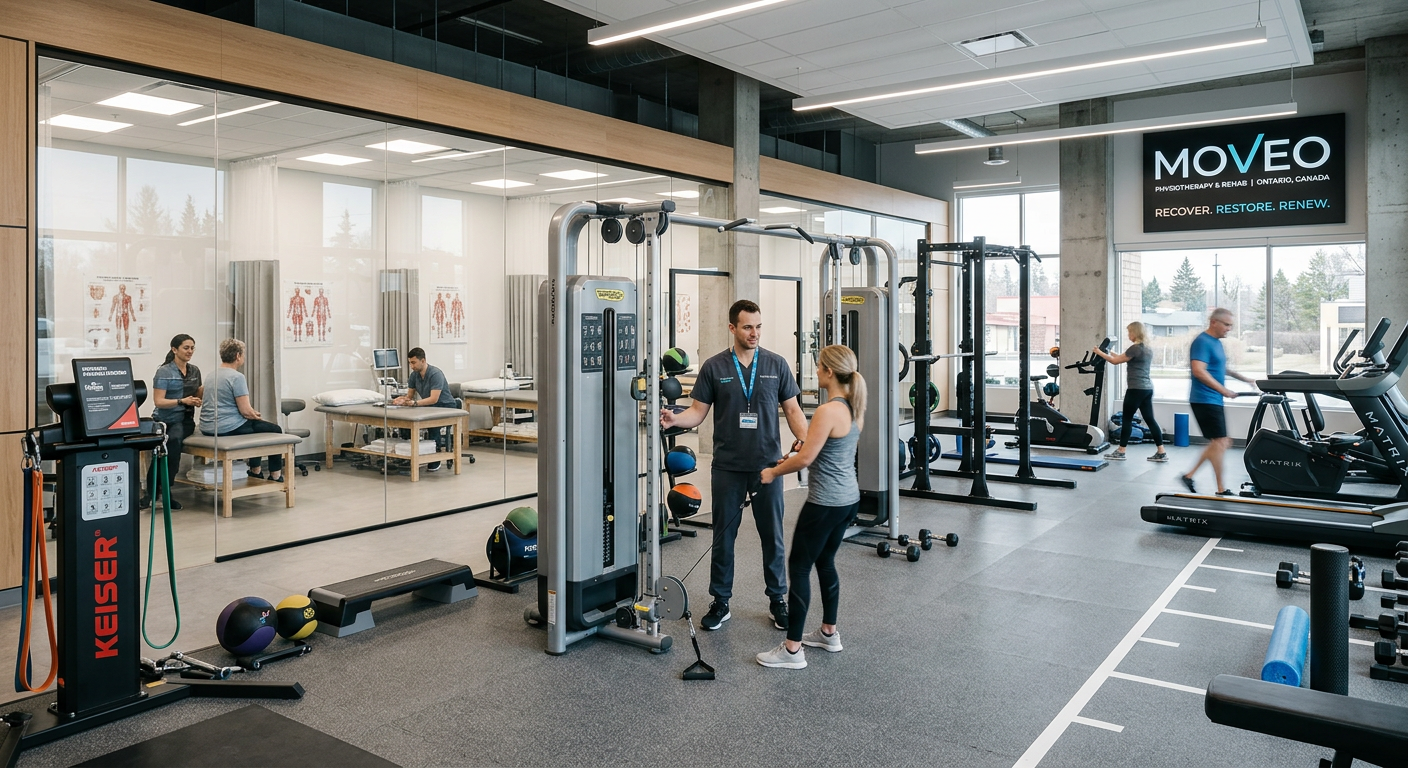
The Newmarket physiotherapy clinic had a problem that its owner did not discover until the first patient used the exercise gym. The clinic had...
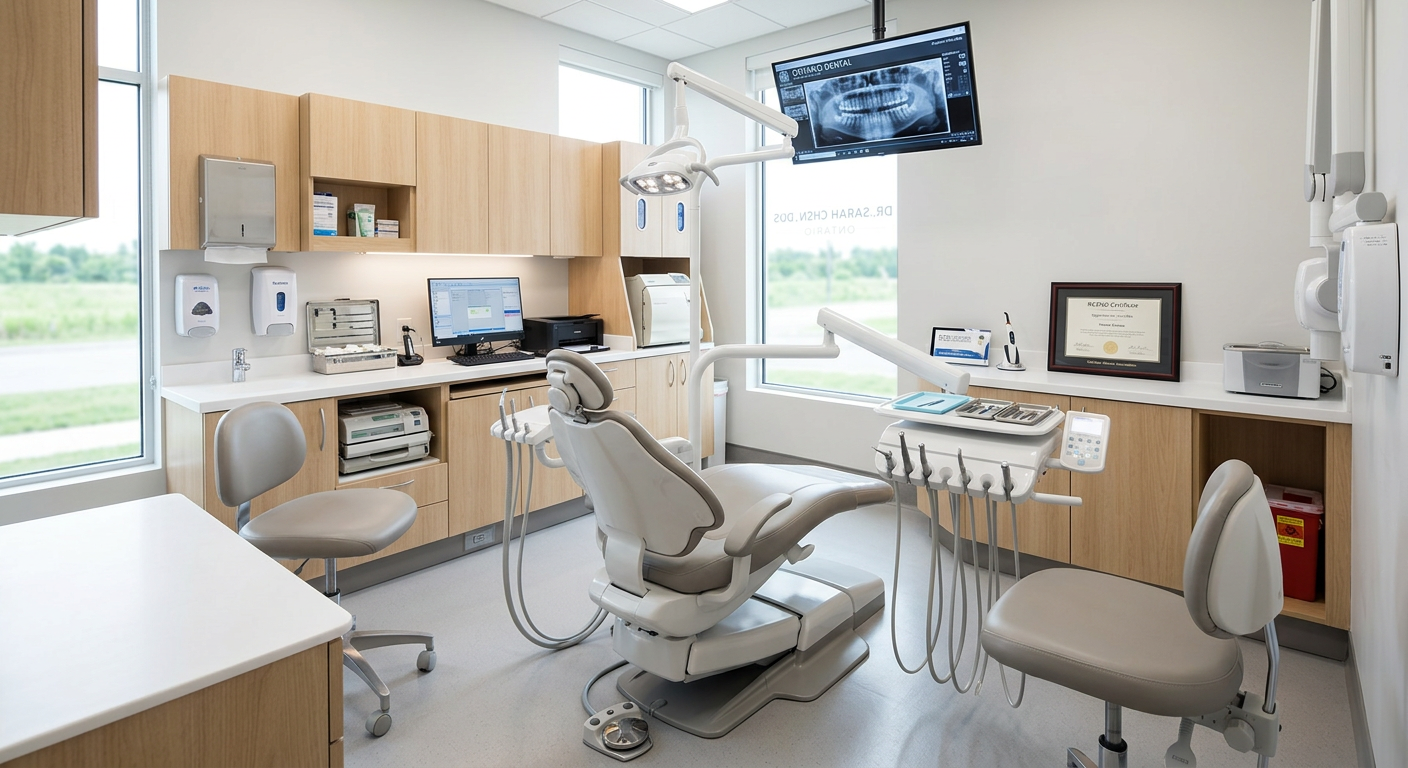
Dr. Ahmed Siddiqui had been practising in North York for nine years when the Royal College of Dental Surgeons of Ontario sent an inspector...