
May 18, 2023

Renovating a medical office in Ontario goes far beyond selecting paint colors and installing new flooring. It’s a highly regulated process governed by multiple...
If you're renovating or building a medical clinic in Ontario, AODA compliance isn't optional—it's the law, and as of January 2025, full enforcement is in effect. The Accessibility for Ontarians with Disabilities Act (AODA), combined with the Ontario Building Code's barrier-free requirements, sets out specific physical design standards that every medical facility renovation must address to provide equitable access for all patients, staff, and visitors.
Non-compliance exposes your practice to provincial fines, human rights complaints, and reputational damage—none of which a busy healthcare professional can afford. This 2026 guide breaks down exactly what AODA requires for medical clinics, what the Ontario Building Code mandates on top of that, how to renovate your space into compliance without losing your entire budget, and what mistakes to avoid.
The Accessibility for Ontarians with Disabilities Act was enacted in 2005 with a clear mandate: make Ontario fully accessible by 2025. The Act covers five areas—Customer Service, Information & Communications, Employment, Transportation, and the Design of Public Spaces—all of which apply to healthcare providers in different ways.
For medical clinics, the most operationally significant standard is the Design of Public Spaces Standard combined with the Ontario Building Code's barrier-free design requirements. Together, they govern the physical layout of your clinic: entrance design, hallway widths, reception desk heights, washroom configuration, signage, and examination room accessibility.
Medical clinics interact with a patient population that disproportionately includes people with mobility impairments, visual or hearing disabilities, cognitive challenges, and age-related limitations. This means AODA requirements are not just a legal checkbox—they're essential to delivering equitable healthcare. A patient who cannot physically navigate your space cannot receive your services. This applies equally to GP offices, walk-in clinics, pharmacies, audiology clinics, and every other outpatient healthcare setting.
Medical clinics in Ontario must comply with: Customer Service Standards (training staff on accessible service), Information & Communications Standards (accessible patient forms and website), Employment Standards (accessible hiring and accommodations), and the Design of Public Spaces Standard (physical environment). This guide focuses primarily on the physical design requirements most relevant to clinic renovations.
AODA compliance obligations apply to all organizations operating in Ontario with at least one employee. For medical clinics, the specific requirements scale with your practice size:
| Practice Size | AODA Physical Obligations | Reporting Required | Deadline |
|---|---|---|---|
| 1–19 employees (Solo GP, small clinics) |
Accessible customer service policy, service animals welcome, accessibility feedback process | No formal filing required | Ongoing |
| 20–49 employees (Medium clinics) |
Above + multi-year accessibility plan, accessible employment practices | Accessibility Compliance Report required | December 31, 2026 |
| 50+ employees (Large clinics, group practices) |
All above + WCAG 2.0 Level AA website compliance, full Design of Public Spaces Standard applies | Compliance Report every 2–3 years | December 31, 2026 (next) |
Critically, the Ontario Building Code's barrier-free requirements apply to all new construction and major renovations regardless of clinic size. This means even a solo-practice family physician undertaking a significant office renovation must meet the OBC's accessibility standards—which mirror and often exceed basic AODA minimums.
If you are undertaking a significant renovation to your clinic, Ontario's Design of Public Spaces Standard and Building Code barrier-free requirements apply to the renovated areas. Minor cosmetic work (repainting, replacing fixtures in-kind) typically does not trigger compliance upgrades. However, any work that changes the layout, floor plan, entrance, washrooms, or patient-facing areas requires full compliance in those affected zones. Always consult with a healthcare contractor and your municipality's building department early. For a full overview of what triggers permit requirements, see our guide to permits and regulations for medical office renovations in Ontario.
This is where most clinic owners get caught out. AODA's physical requirements for medical facilities go beyond simply installing a ramp. Here is a complete breakdown of the design standards your clinic must meet under the AODA Design of Public Spaces Standard and the Ontario Building Code's barrier-free provisions.
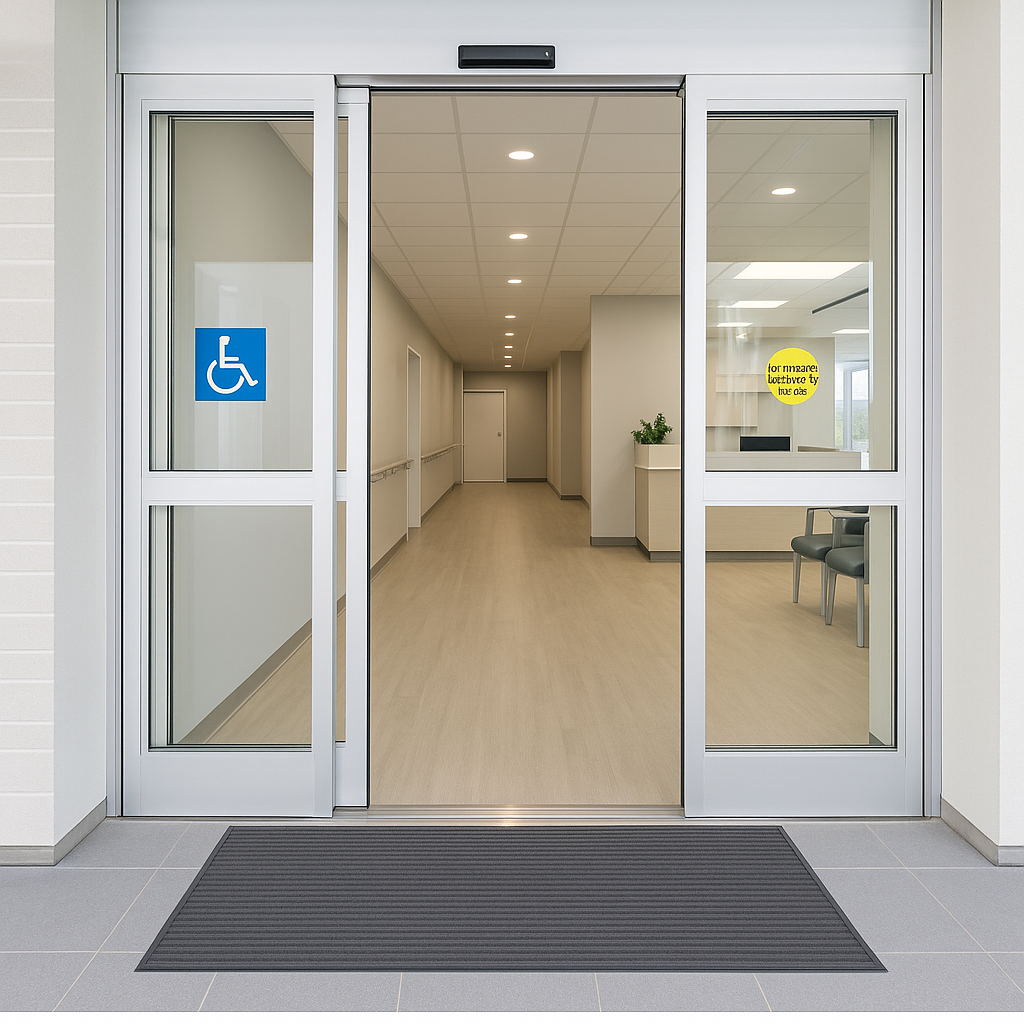
Level or ramped approach to all patient entry points. Ramps must have a maximum slope of 1:12 (8.3%) with non-slip surfaces, edge protection, and handrails on both sides for runs exceeding 9 metres.
OBC Requirement: MandatoryAutomatic door openers or power-assisted operators required at primary accessible entrances. Activation buttons must be mounted at 900–1,070mm height and located to avoid door swing conflict.
Min. 860mm clear width when openIf your clinic has a parking area, designated accessible spaces (min. 3.4m wide + 1.5m access aisle) are required. Quantity: 1 accessible space per 25 standard spaces, minimum 1 if any parking exists.
AODA Design of Public SpacesIf your clinic occupies more than one floor with patient-facing services on upper floors, an accessible elevator or lift is mandatory under the 2015 Ontario Building Code amendments.
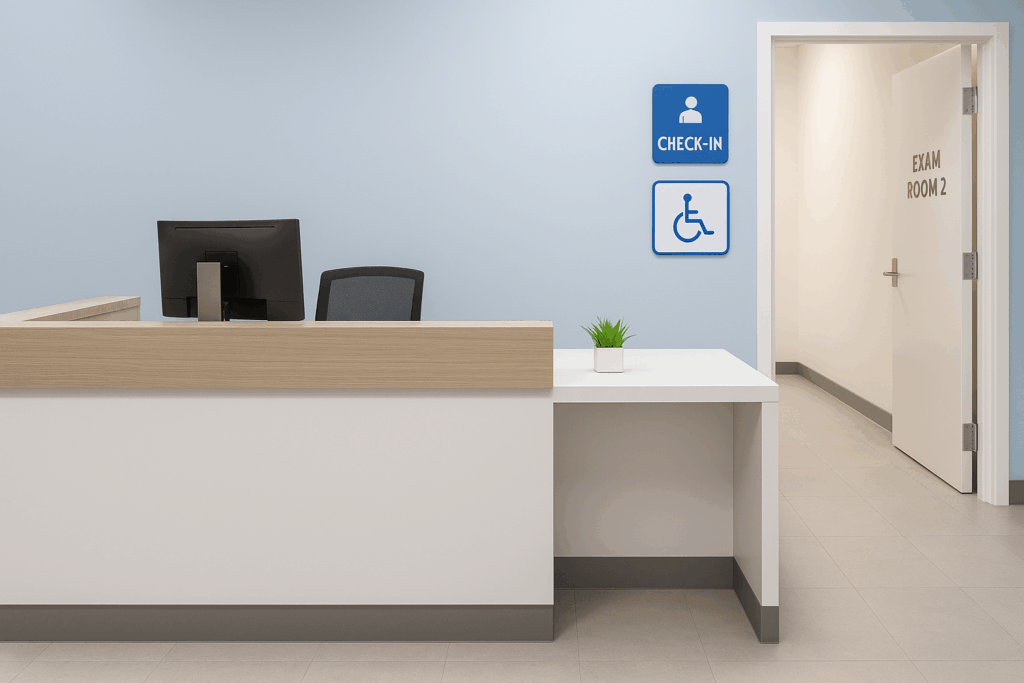
OBC: Required for new constructionThe reception desk and waiting area are often the first AODA failures inspectors find. These are the specific standards you must meet — and for a deeper look at how to design a waiting area that works for every patient, see our guide on designing patient-friendly waiting areas in walk-in clinics:
Older medical offices frequently fail on corridor widths—particularly buildings converted from retail or office use. The OBC requirements for healthcare-relevant corridors:
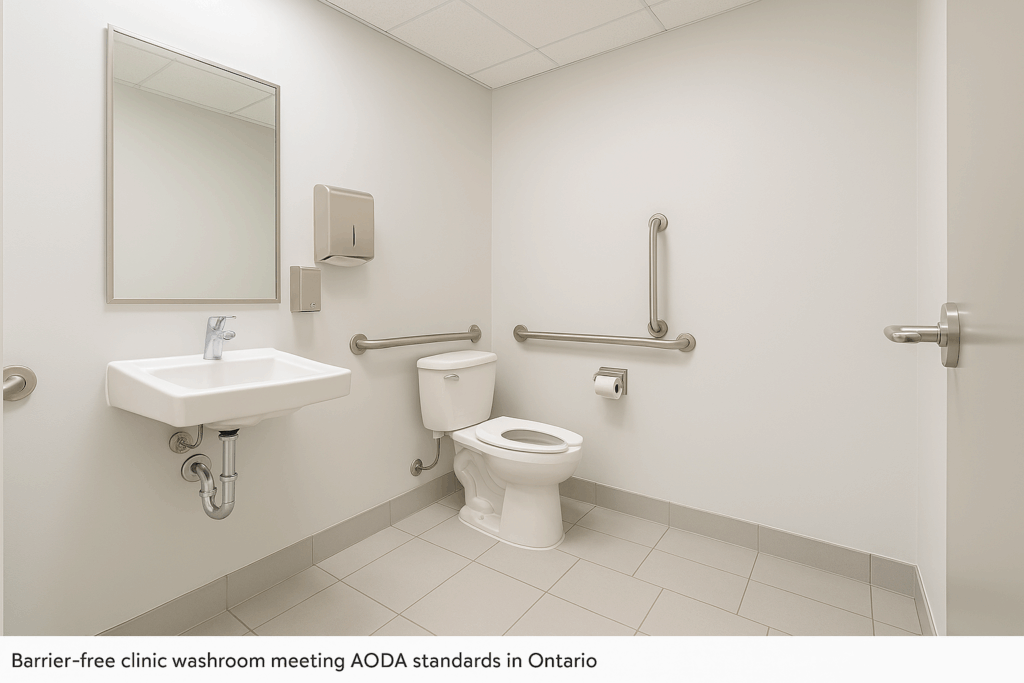
AODA-compliant washrooms are mandatory in all new clinic construction and during renovations that affect washroom areas. The Ontario Building Code specifies the following minimums — the same standards we apply to our accessible bathroom renovations:
This is an area where AODA design requirements intersect with CSA Z8000 healthcare facility standards. For each patient examination room:
Wayfinding signage is one of the most overlooked AODA requirements in medical clinic renovations. Ontario's standards require:
Many clinic owners and even some contractors treat AODA and the Ontario Building Code (OBC) as separate, parallel requirements. In practice, they're layered—and compliance with one does not automatically mean compliance with the other.
| Aspect | AODA (Design of Public Spaces) | Ontario Building Code (Barrier-Free) |
|---|---|---|
| Who enforces it? | Ontario Government (Ministry of Seniors & Accessibility) + human rights complaints | Municipal building department (inspectors) |
| When does it apply? | Ongoing obligation; new spaces and major renovations | New construction and renovation with building permit |
| What does it cover? | Outdoor paths, service counters, waiting areas, policies, digital accessibility | Most indoor spaces: hallways, washrooms, exits, elevators, all building elements |
| Penalty for non-compliance | Up to $100,000/day for corporations; human rights tribunal proceedings | Stop-work orders; failed inspections; no occupancy permit issued |
| Small clinic exemption? | Partial (fewer reporting obligations for <50 staff; physical standards still apply) | None — all construction with permit must comply |
When you pull a building permit for your clinic renovation, your drawings must demonstrate OBC barrier-free compliance before the permit is issued. Your municipality's building inspector will verify physical dimensions during construction inspection. AODA's broader policies (staff training, accessibility plans, reporting) are a separate obligation enforced provincially. A competent healthcare contractor addresses both simultaneously during the design phase—not as an afterthought.
One of the most common concerns we hear from clinic owners is: "Does AODA compliance mean I have to gut my entire office?" The answer is no—but it does require strategic planning to address the highest-impact areas without wasting budget on work that doesn't meaningfully improve accessibility. This applies to every healthcare setting — from a GP's office to a veterinary clinic to a specialist practice.
Before budgeting, commission a formal accessibility audit of your current space. A qualified contractor walks your clinic against AODA and OBC standards and produces a prioritized gap list. This prevents over-spending on compliant areas while missing critical deficiencies. Cost: typically $500–$1,500 for a clinic-sized space.
Entrance, reception, accessible washroom, and examination room corridors deliver the greatest accessibility benefit and regulatory risk reduction. Staff-only areas (break rooms, administrative offices) can be phased to a later project cycle if budget is constrained.
The most cost-effective time to achieve AODA compliance is during a renovation you're already planning. Adding accessibility upgrades to an in-progress project saves 30–50% compared to standalone compliance retrofits, because trades are already mobilized and walls are already open.
AODA standards continue to evolve. Design your accessible spaces with extra clearance (build to 1,800mm turning radius rather than the 1,700mm minimum), blocking in walls for future grab bars, and rough-in for power door operators even if you don't install them immediately.
Maintain as-built drawings showing all accessible features and dimensions. If you ever face a human rights complaint or provincial audit, documented compliance evidence is your strongest defense. Your contractor should provide this as part of project close-out.
These ranges are drawn from our experience with clinic projects across the GTA. For a comprehensive breakdown of full medical office renovation budgets, see our 2026 medical office renovation cost guide.
| Upgrade Type | Typical Cost Range | Notes |
|---|---|---|
| Power door operator (exterior) | $3,500 – $6,500 | Per door unit including electrical connection; push-button activation required |
| Accessible washroom retrofit | $15,000 – $35,000 | Grab bars, wider door, turning clearance, accessible fixtures; depends heavily on existing layout |
| Reception desk accessible section | $3,500 – $8,000 | Lowered counter section with knee clearance; custom millwork |
| Corridor widening (per linear metre) | $800 – $2,500 | Highly variable; depends on wall type (load-bearing vs. partition) and finishes |
| AODA-compliant signage (full clinic) | $2,000 – $5,500 | Tactile/Braille signs for all permanent rooms; wayfinding system |
| Accessible ramp (exterior) | $8,000 – $20,000 | Including handrails, non-slip surface, drainage, guards; highly site-specific |
| Complete AODA compliance renovation (2,000 sq ft clinic) | $40,000 – $120,000 | Scope highly dependent on existing baseline; major retrofits at upper end |
Based on what we see in clinic renovation projects across Richmond Hill, Vaughan, Markham, and the broader GTA, these are the accessibility failures that consistently show up—and that consistently result in failed inspections, complaints, or costly rework. For a broader look at renovation mistakes beyond accessibility alone, see our post on the top 5 mistakes to avoid during healthcare renovations in Ontario.
Use this checklist during your renovation planning phase. All items marked as OBC requirements will be verified by your building inspector before an occupancy permit is issued. For guidance on material selection that satisfies both AODA and infection control requirements, see our article on choosing the right materials for infection control in healthcare settings.
With full AODA enforcement in effect since January 2025, the provincial government has significantly increased its compliance monitoring activities. Medical clinics are a priority sector given their role in serving vulnerable populations.
Under the AODA, non-compliant organizations face:
Beyond provincial fines, AODA non-compliance in a medical setting creates significant exposure under the Ontario Human Rights Code. Patients denied meaningful access to your clinic due to physical barriers can file human rights complaints—proceedings that can result in orders to remediate, public settlements, and significant reputational damage.
Building Code non-compliance carries its own consequences: the municipality can issue a stop-work order during construction, withhold the occupancy permit, or require costly demolition and reconstruction of non-compliant elements. This makes working with a contractor who understands both AODA and OBC requirements from day one the most cost-effective path. If you're planning a renovation, our step-by-step medical office renovation planning guide walks you through how to structure the entire process correctly from the start.
Yes, if you have employees and occupy a space used by patients, you must comply with AODA's Customer Service Standard regardless of size. For physical design, the Ontario Building Code's barrier-free requirements apply to all new construction and major renovations with a building permit—there is no small-business exemption for physical accessibility under the OBC. You would have reduced formal reporting obligations (no compliance filing required for under 20 employees), but the physical space must still be accessible.
Generally, AODA and the OBC apply compliance requirements to areas being renovated, not to your entire existing building. If you're renovating your reception area but not touching hallways, you may not be required to widen existing corridors. However, the accessible path of travel from the entrance to your renovated space must be compliant. If that path includes a narrow corridor, your building department may require it to be addressed as part of the building permit. This is why pre-design consultation with both your contractor and municipality is essential before budgeting.
Costs vary enormously based on your starting point. A clinic that was built or significantly renovated post-2015 (when major OBC barrier-free amendments took effect) may only need signage upgrades and policy documentation—a few thousand dollars. A clinic in an older converted space with narrow corridors, no accessible washroom, and no power doors could require $40,000–$120,000+ in work. The most cost-effective approach is bundling compliance upgrades with a renovation you're already planning, which can reduce the marginal cost of accessibility features by 30–50%.
An accessible washroom requires: minimum 810mm doorway clear width, 1,700mm interior wheelchair turning radius, toilet positioned 460mm from wall with 900mm transfer space, grab bars at specific heights capable of supporting 1.3 kN load, an accessible sink with maximum 820mm rim height and knee clearance beneath, insulated pipes, and an emergency call system reachable from the floor. Standard commercial washrooms frequently lack the turning radius, grab bars, and accessible sink dimensions. Many also have inward-swinging doors that compromise maneuvering space.
Yes. If your clinic has 50 or more employees, your public-facing website must conform to WCAG 2.0 Level AA standards under AODA's Information and Communications Standard. For clinics under 50 employees, you must provide accessible formats of information upon request. Given that most patient-facing healthcare communication now occurs digitally (appointment booking, patient portals, intake forms), addressing digital accessibility is increasingly important even if not yet fully mandated for smaller practices.
For businesses and non-profits with 20 or more employees, the next Accessibility Compliance Report deadline is December 31, 2026. For designated public sector organizations (including hospitals and public health units), reports are required every two years with the December 31, 2025 deadline having just passed. Private medical practices incorporated as businesses must file if they have 20+ employees. Reports are submitted through the Ontario government's accessibility compliance report portal. Non-filing can trigger enforcement action and audit of your physical premises.
RenoEthics specializes in healthcare facility renovations across Richmond Hill, Vaughan, Markham, Aurora, Toronto, and the GTA. We address AODA and Ontario Building Code barrier-free requirements as a standard part of every medical office project—not as an afterthought.
Get Your Free Accessibility ConsultationAODA compliance for your medical clinic ultimately serves the same goal as good clinical care: ensuring every patient can access your services with dignity and independence. The 2025 enforcement reality means the question is no longer whether to comply, but how to do it most effectively.
The practices that approach AODA renovation strategically—bundling compliance work with planned renovations, auditing before budgeting, and working with contractors who understand healthcare-specific requirements—achieve compliance at a fraction of the cost of emergency retrofits after a complaint or failed inspection.
At RenoEthics, we've worked with GP offices, walk-in clinics, and specialist practices across the Greater Toronto Area to build spaces that are not just compliant but genuinely functional for patients of every ability level. AODA compliance, when designed well, makes your clinic more welcoming to everyone—and that's good for your practice's long-term success. If you're weighing whether a renovation is worth the investment, read our analysis on the ROI of modernizing your medical office.
Whether you need a full AODA audit, a targeted accessible washroom retrofit, or a complete clinic renovation that integrates accessibility from day one, we're here to help you navigate the requirements and build a space your patients will appreciate.
Renovating a medical office in Ontario goes far beyond selecting paint colors and installing new flooring. It’s a highly regulated process governed by multiple...
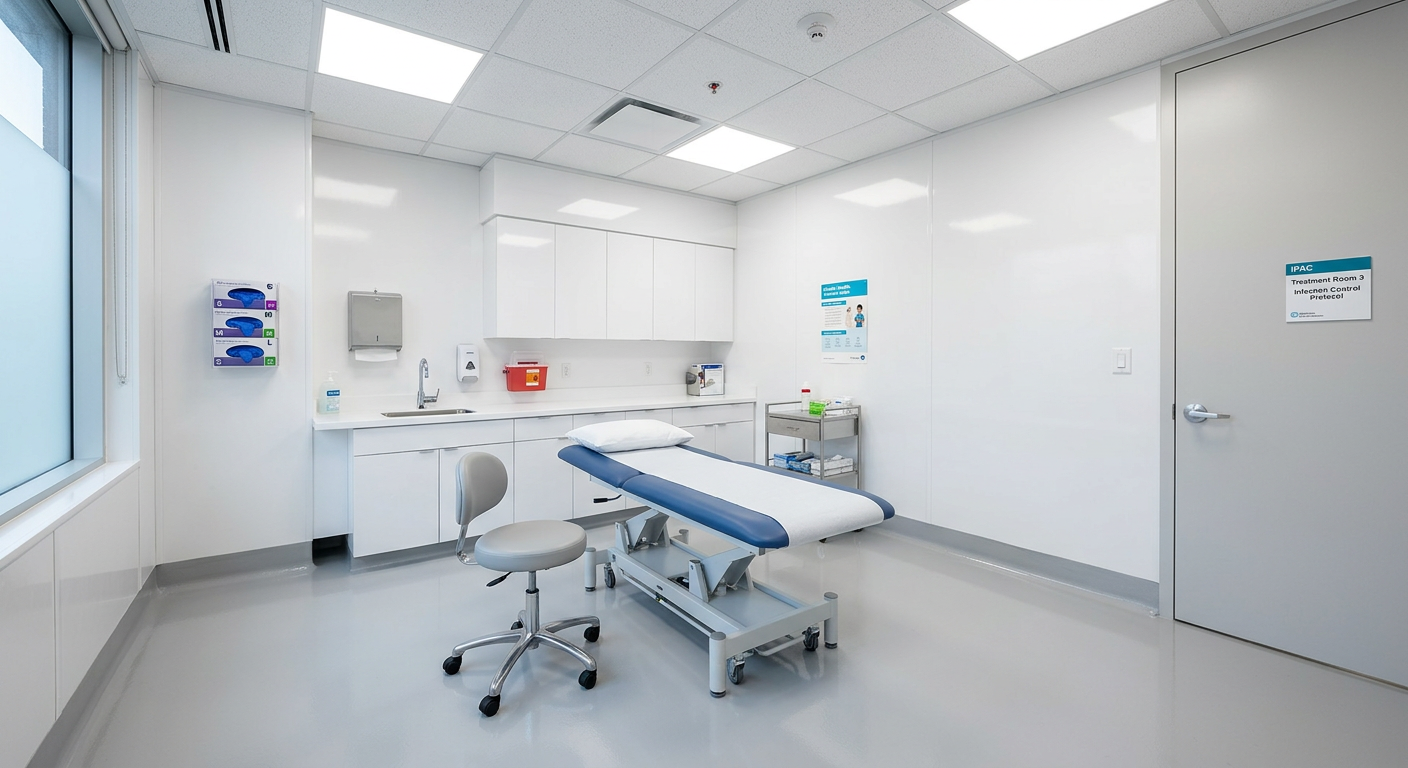
Choosing the right construction materials is critical for infection control in Ontario clinics. Learn what Toronto Public Health and IPAC inspectors look for in...
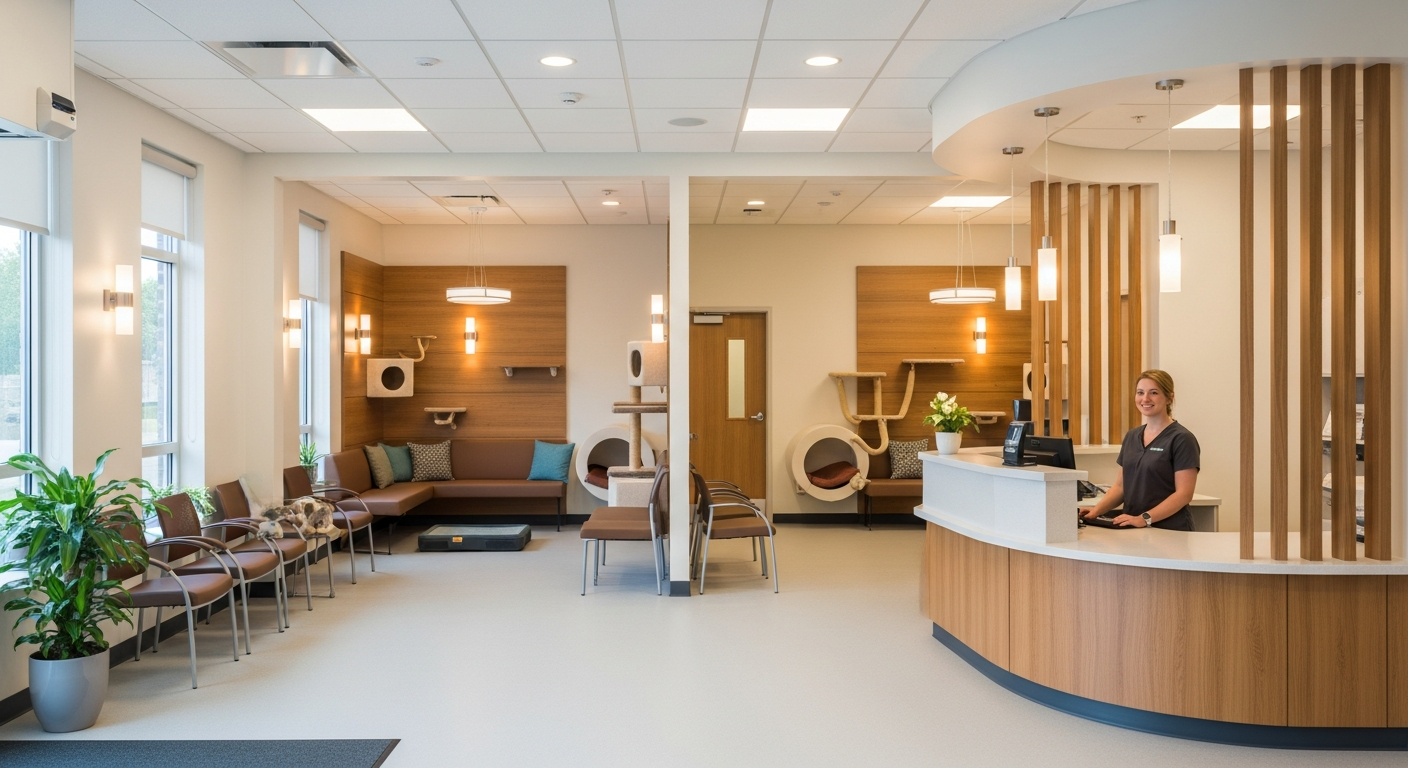
Renovating a veterinary clinic in Ontario? Discover 2026 costs, CVO compliance requirements, and Fear-Free design standards for animal hospitals across the GTA.